A leading force in the revival of 18th century ballet, challenging aesthetic conventions and bringing forgotten masterpieces to new audiences in what The Guardian has called “a whirlwind of desperately needed fresh air.”
Thank you to our dancers from over the years appearing in this collage: Thomas Baird, Michael Barriskill, Patricia Beaman, Brynt Beitman, Deda Christina Colonna, Justin Coates, Caroline Copeland, Seth Davis, Letizia Dradi, Sarah Edgar, Karen Eliot, Carly Fox Horton, Carlos Fittante, Jorge Fuentes, Junichi Fukuda, Stephanie Grover, Olsi Gjeci, Joy Havens, Timothy Kasper, Rachel List, Jason Melms, Hugh Murphy, Glenda Norcross, Valerie Shelton Tabor, Alexis Silver, Matthew Ting, Andrew Trego, Meggi Sweeney Smith, Catherine Turocy, Ani Udovicki, Seth Williams, Timothy Wilson, Gregory Youdan
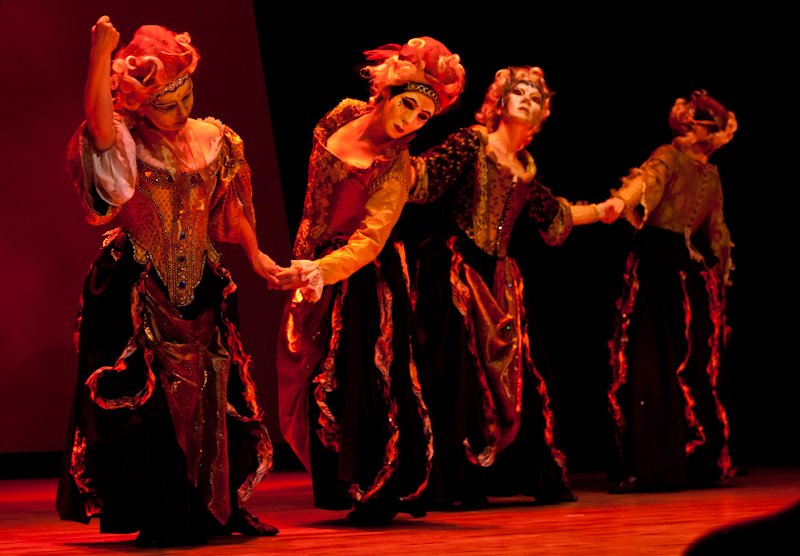
Il Ballo delle Ingrate with Catherine Turocy, Valerie S. Tabor, Glenda Norcross and Alexis Silver
Valerie Shelton Tabor (September 20, 1973- October 30, 2025)
I first met Valerie when she was a student at Southern Methodist University and I was the ad interim Chair of Dance (1995-96). I was drawn to her elegance and beautiful epaulement as well as her quick wit. The department was working on its spring concert and I mounted my choreography on four dancers to J.S. Bach’s French Suite #5. She was perfect for dancing the saraband with her refined technique and languid arms. I was eager to have her join The New York Baroque Dance Company at that time, but she decided to pursue a law degree.
We later connected when she wanted advice on starting a contemporary ballet company. I encouraged her to begin with a school before starting the company… the rest is history. In 2005, Lindsay DiGiuseppe Salih opened the school, Contemporary Ballet Dallas, in Lakewood with a goal of establishing a dance school of the highest caliber, offering various techniques, and in a positive environment to shape dancers as dancers and as individuals. Read More https://www.contemporaryballetdallas.com/about-dance-school
Valerie performed with our company and we collaborated on projects both in New York City and in Dallas. She was praised for her role as the Unicorn in Jean Philippe Rameau’s opera ballet, Zephyre, by The New York Times:
“There was a charming Unicorn dance for Valerie Sheldon Tabor, who crossed the stage in dainty prances while wearing a towering headpiece in the form of the mythical creature.” ( In the photo above dancer Alexis Silver offers the Unicorn an apple.) Full review: https://www.nytimes.com/2010/09/23/arts/dance/23baroque.html
Valerie also danced with passion in Monteverdi’s Il Ballo delle Ingrate (pictured at the top) performed with Ars Lyrica Houston and then the Dallas Bach Society. And in our last collaboration where she created a ballet based on the story of Joseph Bologne, Chevalier de St. George, she was an inspired collaborator. https://artsandculturetx.com/music-milestones-dallas-bach-societys-spring-season/
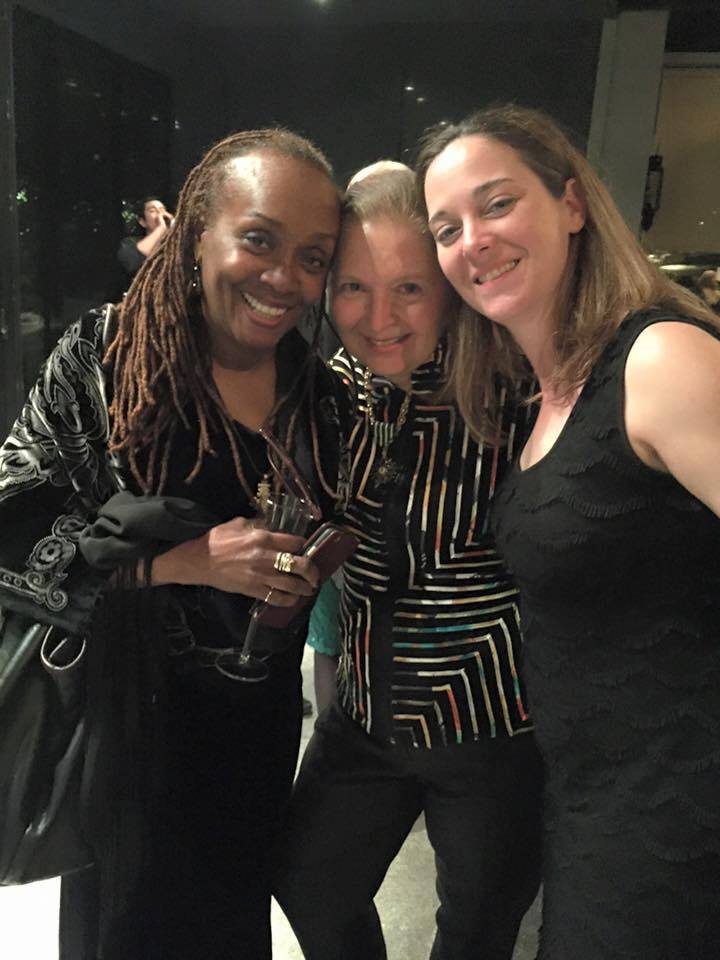
Marcea Daiter, Catherine Turocy and Valerie S.Tabor, collaborators on the Bologne ballet
Valerie’s departure from this world just a few days ago is difficult to understand and she will be missed. Our sympathy goes out to her family and to the many dancers who worked with her and were moved by her artistry, determination and passion for life.
It is with great sorrow that we announce the passing of Sandra Noll Hammond on September 13, 2025. As a specialist in early ballet (only one of her areas of study) we were privileged to work with her. She was a guest for three summers at the NYBDC Santa Barbara Baroque Dance Workshop(link to video archive) as well as Historical Dance at Play. At the SBBDW she taught our students ballet technique ranging from the late 18th century into the early 19th century.
In 2013, as a gesture in gratitude, I set up a website for Sandra, hoping her students could help her post and write updates about her work. With the website Sandra would have an online presence… very much lacking for this brilliant artist whose career was more in the 20th century. We were, in fact , contacted by the Basque Cultural Institute asking to include a video of her work in their exhibit, “Soka,” focused on basque dance. The exhibit took place in Biarritz (2015-09-10 – 2015-10-11 – Northern Basque country – France) and traveled to Donostia – Southern Basque country (Spain) in February 2016. We believe it also traveled to Paris and Barcelona in 2017.
Sandra’s website also allowed for former students to get in touch with her and to share comments on the Website.
To learn more about the work of Sandra, Wickipedia has a lovely entry: Sandra Noll Hammond
The New York Baroque Dance Company and United Palace
On September 21, dress up and join us for a festive ball at the United Palace! This event will offer plenty of dancing, community, live music and fantastic costumes. Light refreshments will be provided.
The program will feature dances fom the Baroque to the Revolutionary era and the early days of the United States, including compositions by George F. Handel, Jean-Jacques Rousseau and African American composer Francis Johnson (1792-1844). All are welcome-dances will be taught at the ball, and even more can be learned at NYBDC workshops Classes.
Join in on the dance floor or enjoy as a spectator! Live music from the vituosic ensemble Twelfth Night, and led by David Belkovski for our special event.
Early Bird Tickets: $25 – Reserve online before September 12 BUY TICKETS
$30 – General Admission after September 12 BUY TICKETS
Time: 6:30-8:30pm on September 21
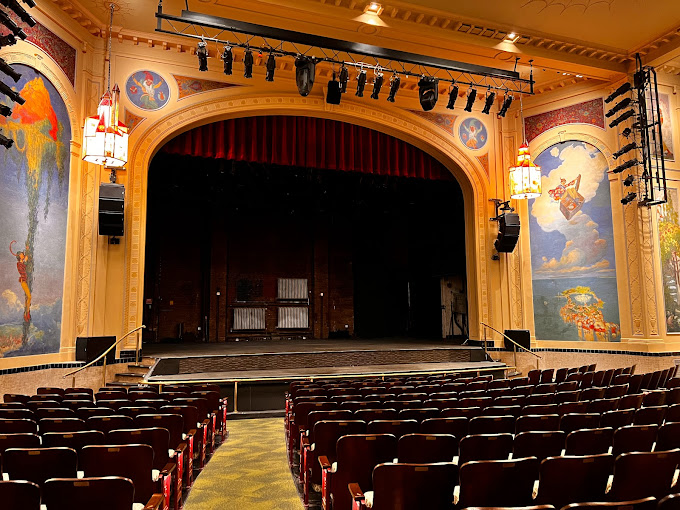
Location Address: United Palace Theater, 4140 Broadway at 175th St, New York, NY 10033
The Uptown Ball is the grand finale of Crackalackin, the United Palace’s celebration of Uptown arts. The Crackalackin concert is free and is 5-6:30. The ball follows from 6:30-8:30 with live music, dancing for all and dance demonstrations from the professional dancers of our company.
CLASSES- Prepare for the Ball
Would you like to learn some dances ahead of time? Join our two Saturday zoom classes on September 6 and September 13 or join our in-person dance workshop with Live Music taught at the Morris-Jumel Mansion on September 20th from 5:30 to 7pm. Admission is only $7! Classes
This project is made possible in part with funds from Creative Engagement, a regrant program supported by the funding agencies DCLA in partnership with the City Council and NYSCA with the support of the office of the Governor and the New York State Legislature and administered by LMCC. We are also grateful for the support of Medical Center Neighborhood Fund and the United Palace Theatre!
We have been in rehearsal all of April and now we are at the exciting part where the orchestra joins us in our preparations. Marie Anne Chiment finished with the costume fittings yesterday and she was joined by Morgan, her assistant and the wig designer, Carissa, who has a multi-colored punk wig for our lead character, Thalia, the Muse of Comedy.
Join us for the modern premiere of an opéra-ballet that broke the mold! This present-day retelling cleverly swaps the original muses’ debate over the qualities of comedy and tragedy for composers, librettists, and choreographers debating which of their art forms garners the best reviews!
Produced by Opera Lafayette, Dance Collaboraters: The New York Baroque Dance Company
Join us for the modern premiere of an opéra-ballet that broke the mold for its time by putting contemporary characters on stage.(Produced by Opera Lafayette, Ryan Brown Artistic Director)
True to its innovative roots, this present-day retelling cleverly swaps the original muses’ debate over the qualities of comedy and tragedy for composers, librettists, and choreographers debating which of their art forms garners the best reviews!
With renowned conductor Christophe Rousset on the podium and Catherine Turocy directing, this witty, joyful, female-centric tale will have you laughing and cheering until the end. Thalie promises to uphold Opera Lafayette’s reputation as “one of the most creatively game and artistically sound operations in the business.”(The Washington Post).
Thalie features a diverse and talented cast of American singers including Jonathan Woody (Opera Lafayette Artistic Associate), Angel Azzarra, Pascale Beaudin, Scott Brunscheen, Jean Bernard Cerin, Patrick Kilbride, Paulina Francisco, John Taylor Ward, and Ariana Wehr. The production also includes eight dancers led by choreographers Anuradha Nehru and Pragnya Thamire, Julian Donahue and Julia Bengtsson of the NYBDC, and Caroline Copeland, Associate Director of NYBDC.
UPCOMING PERFORMANCES The John F. Kennedy Center for the Performing Arts, Terrace Theater Washington, DC Friday, May 3, 2024, 7:30pm Saturday, May 4, 2024, 7:30pmPre-show discussion begins at 6:30pm both nights.&El
Museo del Barrio New York, NY Tuesday, May 7, 2024, 6:00pm Pre-show discussion begins at 5:00pm at El Café.
Online Event at 6pm Eastern time with discussion, photos and videos looking at their recent production of Charpentier’s Les Arts Florissants, soon to be released as a recording!
Turocy and Richman, speak out on their work together over 4 decades of producing Baroque opera, using their last collaboration as a catalyst to reveal their perspectives on the vitality, emotional depth and beauty to be experienced in performing this art today.
Sign up with Eventbrite to Register for this Free Event!
Over 200 people from across the country, Canada and even as far as South America attended the first Early Music Summit. We saw old friends and made new ones. The sense of community was inspiring and I felt honored to be a part of it.
I stayed in an Airbnb with Julia, her son Jesper and her dad, Bjorn. We soon realized why Warrenton Street earned the name of Shear Madness Alley, but somehow it seemed appropriate!
Among the many presentations the ones which meant the most to me as a producer/performer of historical dance are the following:
NAGAMO: A Case Study in Collaboration & Decolonization (Lecture-Performance) Presenters: Jacob Gramit, musica intima Artistic Manager and Lucy Smith
Revolving around Elizabethan choral music by Byrd, Tallis, and Gibbons, NAGAMO features the unique musical perspective of Andrew Balfour’s reimagining of these motets into Cree and Ojibway. The video footage showed the work in performance with a mixed audience of engaged First Nation people and the usual early music audience. The integrated programming included indigenous music and song.
I was reminded of The New York Baroque Dance Company collaboration with the Shinnecock Indians in 2009 at the CW Post Campus Long Island University.
From Gramit and Smith I became aware of how to take our own project deeper into the community and how necessary it is to be open to others joining the project. There own project was structured with an open end, allowing things to grow and change.
Touring Music’s Stories (special format presentation) Presenter: Bill Barclay, Artistic Director, Music Before 1800
Mr. Barclay gave a very clear and inspiring talk on how to create a music/theater production through collaboration. He also stressed the advantages of inviting artists from different fields into the sandbox to help develop the initial idea. Challenges of funding can be met with presenters agreeing to sharing costs of the production in exchange for being on the premiere tour of the work. Even if the funding is not released until the performance, the notion of promised money is a way to get other funders involved. There are so many fascinating stories in dance history waiting to be told, surely our field can do this!
Uniting through dance in the 18th Century (performance-workshop) Presenters: Julia Bengtsson, dancer/choreographer, and Patricía García Gil, fortepiano
Looking at the development of the minuet in a combined workshop and performance, the audience experienced a journey through time and space by listening, watching and ultimately moving to music dedicated to the minuet – which dominated the dance floor for almost a century and spread from France across Europe and to the colonies. Bengtsson and Garcia Gil are a great team and we all hope they go more deeply into this project so we can hear more from them on this important subject drawing much attention from the field.
Julia Bengtsson emphasizing the importance of musicians and dancers working together and collaborating on presentations and performances.
Building on Bach: Six New Suites for Solo Cello (lecture-performance) Presenter: Jessica Korotkin, cello
Inspired by the creative practices of the eighteenth-century performer-composer, Ms. Korotkin created six cello suites drawing on the music and compositional methods of Bach. This process helped her to expand her approach to historically informed performance practice through discovering the composer-performer within. As I listened to her speak, I thought of dance and how we automatically analyze period choreographies in order to choreograph new works in the Baroque style. But there is something for dancers to learn about the importance of theory in addition to the practical questions. Her passion for theory erupted into a creative experience for her which was evident in the new music. If historical dancers could go more deeply into theory I think we would feel something similar.
Concerts were of a very high level. I especially appreciated the Young Performers Festival held each day. The summit closed with EMA’s Annual Awards Ceremony & Emerging Artists Showcase [ES] Marie Nadeu-Tremblay, baroque violin was unforgettable. Please see her perform live whenever you can. The Fooles, 17th century chamber ensemble took us to another level! And Maryse Legault, historical clarinet, with Gili Loftus, fortepiano, astounded me with the beauty of their instruments and a soul-felt performance by Legault.
Catherine Turocy and Julia Bengtsson at the EMA Summit and representing The New York Baroque Dance Company. Both Catherine and Julia are members of EMA and on the Board.
In conclusion, for the historical dance community, I would like to quote Lynn Garafola from her book, Legacies of Twentieth-Century Dance: “ A deep current of anti-intellectualism runs throughout the dance world, a mistrust of scholarly analysis, of probing beyond the evident, of questioning the truthfulness of received wisdom.” (2005, viii) I believe this is true and I would like to ask our historical dance community to join the Early Music America Summit next year. I am sure you will experience a different kind of summit where the presenters are both theorists and practitioners and the excitement of the presence of history in today’s world is palpable.
September 29 at Moody Performance Hall at 7:30pm with The Dallas Bach Society Dancers of the NYBDC, Brynt Beitman, Junichi Fukuda (making a special appearance), Meggi Sweeney Smith, Alexis Silver and young dancer Lidiia Volkova will appear in the DBS opening program for the season, “Bach and the Dance.”
Pictured below are Caroline Copeland and Roberta Lara caught in action by Liz Schneider-Cohen in a lecture presentation of “Bach Figures” at the 92nd Street Y in NYC
What are the dances on the program?
Bach Figures, choreographed by Catherine Turocy to select movements from the Bach Cello Suites, the choreographer wishes to answer the question: Is Bach’s music meant to be danced? This newly conceived suite of dances reaches out to today’s audience by artfully matching the aesthetic theory behind Bach’s music with dance theory and practice of the same period.
Movement 1: Beginning with the Sarabande from Cello Suite #3 in C Major the dancer appears in practice clothes. As she listens to the opening bars of the sarabande she first allows the music to stir inside her before the dance emerges from the body into choreography. The “movement of the soul” was an essential concept embraced by art theory in Bach’s time. In dance, the sweet sounds of the music are heard and enter the soul which is stirred to such a degree that movement can no longer be contained and must escape through the body. Being dressed in contemporary clothing, the dancer’s movements are more visible, not being hidden by panniers and long skirts.
Culturally, the sarabande has Spanish origins. Arm movements from Spanish dance are echoed in the dancer’s movements.
Movement 2: The Prelude from Cello Suite #1 in G Major is an imaginative play with the Golden Ratio. In this solo, choreography for a female dancer highlights the turning point of the Golden Ratio in the music. Another convention from Bach which is also shared by the dance, is a play with spelling a name. Bach would sometimes, through musical composition, spell his own name. Dance choreographers would honor a personage by spelling out the name in the path or track of the dance. Not only could the audience perceive the spelling of the name being performed, but the notated dance would be an obvious graphic record. In this movement the dancer spells B-A-C-H through a punctuated path in space. The dancer is in full Baroque costume with flow of the skirt creating an after-image of the motion.
Movement 3: The Minuet from Cello Suite #1 in G Major for two women explores the melody and rhythm of the music while performing the common figures of the minuet. The dancers are in full Baroque costume. The audience is deeper into the meaning of the dance having experienced the sarabande and prelude.
Movement 4: The Gigue from Cello Suite #1 in G Major is playful , conversational, witty and uplifting. This duet for a man and woman reveals the dance behind the music. The dancers are in full Baroque costume. Flirtation can be a part of court dance and this next layer of social interaction sets the audience up for the expressive allemande.
Movement 5: The Allemande from Cello Suite #5 in C Minor was a dance common to the ballroom and closer to the tempo of a bourrée. However, Bach’s allemandes are not the happy quick dances of young lovers, but something else completely. In this dance the choreography is inspired by the complex pairing of arms as the two dancers intertwine and pause in various romantic dance poses. These poses are directly from the dance manuals during Bach’s time and reveal a silent and mysterious courtship of movement. The dancers are in full Baroque costume, reminding the audience of Dresden porcelains.
Movement 6: The Bouree from Cello Suite #3 in C Major is a solo male dance of improvisation. Fully schooled in the dance theory and practice of the 18th century, the dancer allows the music to move through his body as he spontaneously releases the music into movement. Drawing from both the comic and serious styles, the dance is always a delight! The dancer is in modern dress, allowing the audience to see the shaping of the body more clearly and demonstrating how the Baroque dance style can feel contemporary when seen in today’s fashion.
Movement 7: This last movement is not to music from Bach and is played on the modern piano. Composed by Scott Joiner, the composition is beautifully inspired by Bach and is titled, “Prelude.” Returning to the stage in modern dress, the Allemande couple repeats the Allemande, but it takes on a more modern meaning in a contemporary context. The contemporary music under the Baroque dance emphasizes different parts of the period movement and allows the audience to relate to the dance in their own way. The past is always present whether we can identify it or not. Aesthetic theory from Bach’s time can still move audiences today.
Bach Figures is designed by the choreographer to play with a time cycle, beginning in the present, delving into the fundamental Baroque and returning to the present. Today’s audience relishes the journey and gains a deeper understanding of Bach’s music.
Bach’s French Suite #5 for Harpsichord in G Major
Storyline: Two couples meet for a fun evening of dance. The sophisticated evening eventually bends toward a tipsy loure and leads to a gigue for all 4 dancers which culminates in a game of musical chairs and much laughter.
The opening Allemande is beautifully played by James Richman. The following Courante sets the stage with the arrival of the two couples in full Baroque costume. The Sarabande is a dance for a solo woman in the majestic style followed by the Gavotte, a solo for a man in a joyous but elegant court style. Next comes the Bourrée, a duet for a couple, happy and witty. The Loure is a solo for a man which involves a drinking challenge and is very virtuosic. The final dance is a rollicking Gigue, danced by all as a game of musical chairs.
will be held on Tuesdays from 1-2 Eastern Standard Time.
zoom link:
Catherine Turocy is inviting you to a scheduled Zoom meeting.
Topic: Baroque Practice Time: Jan 30, 2024 12:00 PM Central Time (US and Canada) Every week on Tue, until May 14, 2024, 16 occurrence(s) Jan 30, 2024 12:00 PM Feb 6, 2024 12:00 PM Feb 13, 2024 12:00 PM Feb 20, 2024 12:00 PM Feb 27, 2024 12:00 PM Mar 5, 2024 12:00 PM Mar 12, 2024 12:00 PM Mar 19, 2024 12:00 PM Mar 26, 2024 12:00 PM Apr 2, 2024 12:00 PM Apr 9, 2024 12:00 PM Apr 16, 2024 12:00 PM Apr 23, 2024 12:00 PM Apr 30, 2024 12:00 PM May 7, 2024 12:00 PM May 14, 2024 12:00 PM Please download and import the following iCalendar (.ics) files to your calendar system. Weekly: https://us02web.zoom.us/meeting/tZMtcu2hqTwsG9VJX2jqxaxJtlTlbThVFaZI/ics?icsToken=98tyKuGvrj4uE9OSthiGRpwEAo_4LPPwtmZdjfprtie3CTFLYxvcIu52PrBLGO72
This free class online is designed for the general public. The class will be hosted by Catherine Turocy with additional guest teachers from the NYBDC and colleagues. Most classes will be a movement class but some sessions may be guided discussions, interviews or an open meeting for practitioners in the field. Please watch our Facebook Page for specifics each week. The zoom link and subject of the class will be listed one week ahead of the class.
Mr. Caverley’s Slow Minuet ‘A New Dance for a Girl’
This Tuesday, November 14th, join Catherine Turocy in her free weekly online class, Baroque Practice. She will look at this notation from theoretical and pedagogical perspectives, illuminating the dance theory behind the choreography. Also, it is a fun solo dance and can be done in a small space!
Moira Goff has a lot to say about the history of the Slow Minuet.





 The New York Baroque Dance Co.
You must be logged in to post a comment.