Seattle Historical Dance Workshop 2017
Faculty and Guest Artists
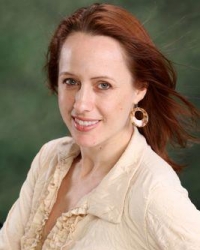
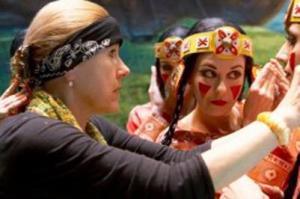 MILLICENT HODSON, choreographer, dance historian and graphic artist, works with Kenneth Archer in a London-based dance and design team called Ballets Old & New. They reconstruct modern masterpieces and create new works. Their latest book, The Lost Rite (2014) was published in Russian (2015) by the Vaganova Academy.
Hodson and Archer create facsimiles of lost works by 20th century choreographers and designers: three inspired by Vaslav Nijinsky, notably The Rite of Spring (Stravinsky & Roerich 1913), five early ballets by George Balanchine including Le Chant du Rossignol (Stravinsky & Matisse 1913) and four ballets by Jean Borlin, among them La Creation dy Monde (Milhaud & Leger, 1923) which will they are reviving next season at the Maradon Theatre, Athens. Hodson has created a dozen or so new ballets with Archer, including Stravininsky’s opera Persephone. Among the companies where they have staged productions are the Royal Ballet, London; Hamburg Ballet; Paris Opera Ballet; Les Ballets de Monte-Carlo; Polish National Ballet; Rome Opera Ballet; Mariinsky Ballet, St Petersburg; and Joffrey Ballet, USA. They present lectures and workshops for museums and universities and write articles on dance and design for periodicals worldwide. Their essays have been commissioned for many books and catalogues. A number of documentary films have been made about them. Hodson’s dance drawings and the couple’s production sketches are published and exhibited internationally. Pendragon Press published her trilogy on Nijinsky choreography and she contributed an essay and cover drawing to the definitive Indiana University book The Rite of Spring at 100 (2017). As an illustrator, Hodson collaborated on Deborah Bull’s the Everyday Dancer (2011), Elizabeth Kiem’s novel Ring Around the Luna and several books on music and dance. Hodson and Archer received the Massine Legacy Prize in Italy (2013), the Nijinsky Medal from Poland (1992), and a variety of other awards, most recently a residential fellowship at the Center for Ballet and the Arts, NYU (2017), for their project Balanchine’s Twenties.
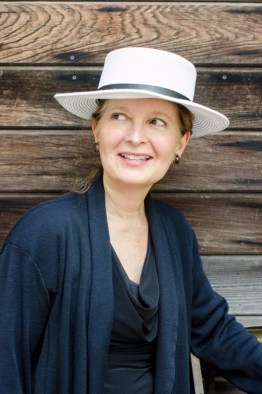
photo by C. Andrako
CATHERINE TUROCY is an expert in 17th and 18th century period performance with over 60 Baroque operas to her credit. She was decorated by the French as a Chevalier in the Order of Arts and Letters. She received the BESSIE Award as well as the Natalie Skelton Award for Artistic Excellence and the Dance Film Association Award for “The Art of Dancing.” NEA International Exchange Fellowships supported extended visits in Europe. She is the co-founder and Artistic Director of the New York Baroque Dance Company since 1976 as well as a founding member of the Society for Dance History Scholars. Since 1995, Turocy has been producing summer workshops for The New York Baroque Dance Company. In 2017, she took the New York Baroque Dance Company to Cuba, performing at the Esteban Salas Early Music Festival and holding a workshop for Carlos Acosta’s dance company Acosta Danza. Turocy has built the Baroque dance revival in the US over the past 40 years. Company members trained by her are resident choreographers for Haymarket Opera in Chicago and the Boston Early Music Festival and some manage their own companies. She also teaches neo-Baroque classes to contemporary choreographers.
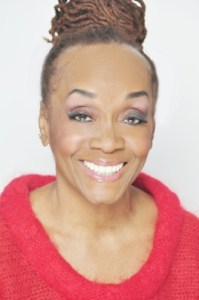 MARCEA T. DAITER is a Certified Katherine Dunham Instructor, Research Consultant, Choreographer, Performing Artist, NYS Licensed Dance Educator, Pilates Mat Trainer, a Teacher of the Zena Rommett Floor-Barre®, Capoerista, Artistic Director of Kaleidoscope of Kultures Dance Theater, and recipient of the 2009 Surdna Arts Teachers Fellowship. She is also an Artist Member at New York Live Arts, SAG, and AFTRA. She earned a BA in Sociology from Loyola University, and a MFA in Dance Theater from Tisch School of the Arts at NYU. A native of Chicago, she commenced her studies in ballet, jazz, modern, African, Caribbean dance, dramatic arts, voice and music. She was one of the dance artists representing the U.S. in Lagos, Nigeria at the International Arts Festival (FESTAC) in 1977, performing with Darlene Blackburn’s Afro-American Dance Theater with Fela Anikylapo-Kuti at the Afro-Shrine. Marcea relocated to NYC, receiving scholarships to study at The Martha Graham School, Harkness House, the Alvin Ailey American Dance Center, and Clark Center for Dance. Marcea also had the wonderful opportunity to study Haitian Folklore dance with Louines Louinis and Jean Leon Destine. She has performed with the New York Baroque Dance Company, Joan Miller’s Dance Players, the Eleo Pomare Dance Company, Nanette Bearden’s Contemporary Dance Theater and Fancy Dancers Inc. Her field-study trips to Africa, Cuba, Mexico, Haiti, and U.S. to the Katherine Dunham Institute of Intercultural Studies and Jacob’s Pillow have inspired her teaching in language arts, writing curriculum, dance anthropology, body somatics, and led to collaborations with Catherine Turocy, Artistic Director of The New York Baroque Dance Company. Currently she is a Dance Specialist with the NYU Dept. of Education teaching dance in Central Harlem at Wadleigh Secondary School for the Perf. and Visual Arts, an Adjunct Lecturer teaching the Katherine Dunham Dance Technique, and completing of Talley Beatty interview for publication. She has taught at New York City College of Technology, NYU’s Steinhardt School, in the Graduate Acting Program at Tisch School of the Arts, City College of New York, Lehman College, Hofstra University, Long Island University, Borough of Manhattan City College, The Haitian-American Academy of Ballet & Arts in Port Au Prince, Haiti, Steps on Broadway Dance Studios and The Alvin Ailey American Dance School.
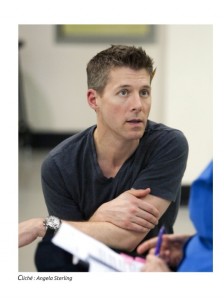
 DOUG FULLINGTON is Audience Education Manager and Assistant to Artistic Director Peter Boal at Pacific Northwest Ballet in Seattle. He is responsible for developing PNB’s audience education programs and also is on the consulting staff of PNB School as dance historian. Doug is a musicologist and fluent reader of Stepanov choreographic notation. He has contributed reconstructed dances to The Daughter of Pharaoh for the Bolshoi Ballet (2001); “Le jardin animé” from Le Corsaire for PNB School (2004); Le Corsaire for the Bavarian State Ballet (2007); Giselle with Marian Smith and Peter Boal for PNB (2011), and Paquita with Alexei Ratmansky and Marian Smith for the Bavarian State Ballet (2014). In 2016, he staged a streamlined reconstruction of Le Corsaire for PNB School and was a resident fellow at NYU’s Center for Ballet and the Arts and research fellow at the Jacob’s Pillow Dance Festival. He is a regular presenter and moderator for the Guggenheim Museum’s Works and Process series. Doug currently is editing the first critical edition of Adolphe Adam’s Giselle (1841) for Barenreiter and writing a book about using 19th-century sources to revive ballets, both with his colleague Marian Smith.
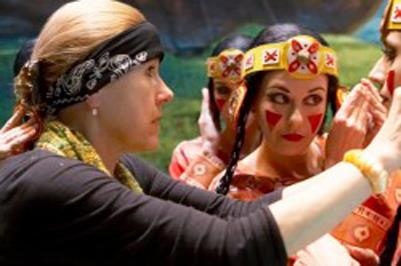
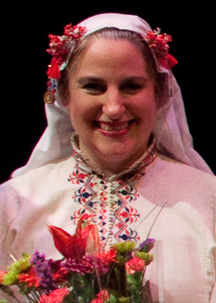
 SIDNEY DEERING is the Artistic Director of The Radost Folk Ensemble, an ethnic dance company based in Seattle, dedicated to teaching, preserving and presenting the dance traditions of Eastern Europe. The ensemble has a 36-year history and a reputation of bringing the color, energy and precision of Eastern European and Balkan culture to the stage. It presents the music, song and dance of Croatia, Bosnia, Macedonia, Bulgaria, Romania, and Hungary, with the splendor of authentic costumes and live music on traditional instruments. Radost performs at cultural festivals, ethnic community events, school assemblies and other concerts. Radost is unique as it has been presenting folk music and dances of all Eastern European and Balkan countries. Recently the ensemble started focusing on Bulgarian material and is grateful for the rich legacy that is now being embraced by members of Seattle’s Bulgarian community proudly participating in their own cultural heritage. Radost demonstrates the huge potential for ethnic dance — both for collaborative projects (between different dance forms), and for presenting authentic material. In 2005 and 2008 we participated in Seattle Theatre Group’s DANCE this… concert (part of their educational program) to rave reviews.
 JULIET MCMAINS , Ph.D. is a dance scholar and artist whose work centers on social dance practices and their theatrical expression on competition and theatrical stages. She has published numerous books and articles on salsa (Spinning Mambo into Salsa: Caribbean Dance in Global Commerce, Oxford University Press, 2015) ballroom dance (Glamour Addiction: Inside the American Ballroom Dance Industry, Wesleyan, 2006), rumba, swing, and tango, all genres in which she has choreographed, performed, and danced socially for many years. Juliet’s current research examines experiences of women dancing tango in same-sex partnerships. Juliet is a Professor in the Dance Program at the University of Washington.
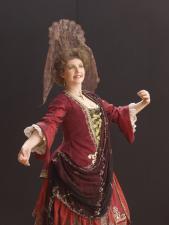 ANNA MANSBRIDGE has been working as a dance artist and educator for over 25 years both in the USA and in her native Britain. She has a First-Class Honors Degree in Dance and Education from Bedford College, UK, and an MFA in Choreography and Performance from Mills College. Anna trained extensively in the UK and the USA as a Historical Early Dance Specialist with teachers foremost in the profession. Upon immigrating to Seattle, she founded Seattle Early Dance (2000), a company devoted to reconstructing dances from the 15th through 18th centuries. Anna has choreographed, directed and performed in many productions including Le Bourgeois Gentilhomme (Lully & Molière, 1670) for Cornish Opera Theater and Wayward Sisters with Pacific Musicworks (dir. by Stephen Stubbs) and Seattle Dance Project. Most recently she was the choreographer for Gluck’s Orphée et Eurydice (1774) presented by Pacific Musicworks/ University of Washington School of Music. Her choreography was described as “effective and beautiful” by Melinda Bargreen, Seattle Times. Anna has taught on many prestigious Early Music conferences both in Europe and the USA. In 2010 Anna published her DVD titled Baroque Basics: An introduction to the Dance and the Music of the Baroque Period.
 JOEL PLYS began his swing dance career in 1998 on a date in Chicago. He learned very quickly from countless workshops and non-stop dancing, bringing his skills to Cleveland, OH. Joel taught swing full-time out in Cleveland for 4 years and started Get Hep Swing, LTD. He co-created the very first All Balboa Weekend with Valerie Salstrom. He moved to San Diego in 2002, started 2PlySwing Productions and taught all over the world with Alison Scola. As of 2012, Joel began Swing Dancing San Diego in his hometown, training a community of social dancers, students, performers and teachers.
Joel has a high quality, energetic approach to the dance, making every lesson a blast! As a regular teacher at major events all over the world, his down to earth, enthusiastic attitude is contagious. He has taught in 32 US states (and counting) & countries including: Australia, Austria, Canada, England, France, Germany, Hungary, Italy, New Caledonia, New Zealand, Scotland and Sweden. In 2011, Joel was inducted into the Camp Hollywood Hall of Fame and then in 2014, inducted into the California Swing Dance Hall of Fame.
Joel has had the honor and privilege to learn directly from the original masters of Lindy Hop and Balboa: Frankie Manning, Maxie Dorf and Willie Desatoff. He has a full knowledge of various styles from years of study that he shares in his instruction of Balboa, Lindy, Charleston, Collegiate Shag, Jazz Movement, and Pre-Swing dances (Texas Tommy, One Step, etc.) To ‘preserve’ a dance, you must understand the technique and characteristic fundamentals of that dance. For a dance to ‘evolve’, you must be open to everyone adding creative elements to that dance. Joel encourages students to study and be open to “differences” so that they can make the dance their own.
He embodies these qualities in his instruction and dancing while remembering the true reason we dance – for FUN!
 LINDA TOWNSEND WEST, Assistant to Juliet McMains, started dancing early — about when she could talk — and jump. Lessons began at age 6. Ballet, tap, and figure skating, which morphed into ballet and modern in high school — Martha Graham technique. Dance was lost as adult life got way-too-serious, until her teenage son helped propel her back — when he came home and said he wanted to learn to swing dance. But it was a Living Traditions, Richard Powers Waltz Weekend, fused with her training and experience in education, that showed her, her life’s dream. She’s been studying and teaching dance ever since, and is currently working on an independent project in the history and ethnology of American popular music, dance and culture, for arts based education.
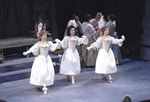 Seattle Early Dance, founded by Anna Mansbridge in 2000, is the Pacific Northwest’s premier early dance company. It specializes in recreating the pageantry and pomp of the fifteenth through eighteenth century European courts. These dances are reconstructed using original dance manuals and treatises, and are performed in exquisite costumes to music performed on authentic period instruments. Seattle Early Dance has performed with numerous local early music ensembles including Pacific MusicWorks, Seattle Baroque Orchestra and Gallery Concerts. Opera credits include The Indian Queen by Henry Purcell (1695) and Rappresentatione di Anima et di Corpo by Emilio De’ Cavalieri (1600












You must be logged in to post a comment.